
The wheel turns, the sun slips lower, and once again the year balances on its knife-edge: equal day, equal night. This is the Autumn Equinox, known in modern Pagan tradition as Mabon. It is a time of equilibrium, gratitude, and preparation — the moment when light and dark stand in perfect symmetry before the inevitable descent into the long nights of winter.
Across cultures — from Celtic harvest rites to Heathen autumn sacrifices, from Wiccan Sabbats to folk customs tied to the land — this balance has always been marked with reverence. While the specific name Mabon is a modern addition to the Wheel of the Year, its themes are ancient: harvest, balance, and reflection.
WHEN IS MABON?
Mabon is celebrated on the Autumn Equinox, the day when light and dark stand in balance. The date shifts slightly each year because it follows the solar calendar rather than the fixed one on the wall.
-
In the Northern Hemisphere, Mabon usually falls between September 21st and 24th.
- In the Southern Hemisphere, where the seasons are reversed, it is observed around March 20th to 23rd.
In 2025, the Autumn Equinox (Mabon) will occur on September 22nd at 13:20 UTC.
Whether kept on the exact astronomical moment or the nearest convenient day, the essence of Mabon remains the same: a time to honour the harvest, give thanks, and reflect on balance before the year tips into the dark half.
THE MEANING OF MABON
The word Mabon is drawn from Welsh mythology, where Mabon ap Modron (“Great Son of the Great Mother”) is associated with youth, rebirth, and cyclical return. In most modern Pagan and Wiccan circles, Mabon is usually pronounced MAY-bon (rhymes with “raven”). In Welsh, the name Mabon ap Modron would be pronounced more like MAH-bawn (with the final “-on” leaning toward “awn” as in “fawn”).
Though there is no historical evidence of ancient Celts naming the equinox after Mabon ap Modron, modern Pagans have embraced the name as symbolic of this season’s deeper themes: rebirth, balance, and the cycles of light and dark.
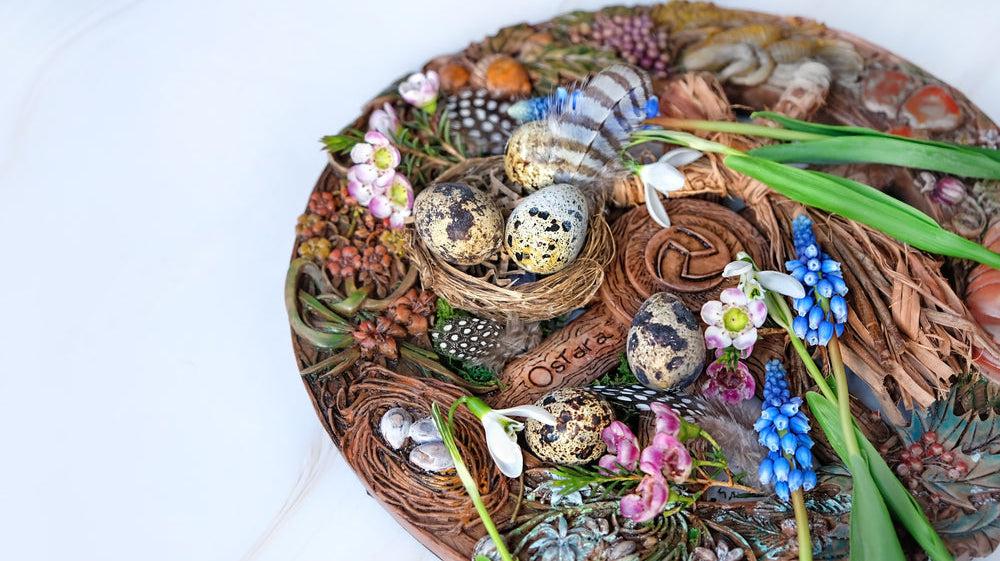
Within the Wheel of the Year, Mabon falls at the second harvest festival (after Lughnasadh/Lammas in August and before Samhain at the end of October). Where Lughnasadh celebrated the first fruits of the field, Mabon is a deeper gathering-in of grains, grapes, apples, nuts, and the last abundance before frost. It is the season of harvest feasting, gratitude, and balance.
Mabon’s meaning is therefore twofold: it is both a celebration of abundance and a reckoning with decline. As the fields empty, the light wanes.
AUTUMN EQUINOX IN PAGAN AND CELTIC TRADITIONS

The Autumn Equinox marked a turning of the year that people could see and feel in the land around them. Shadows lengthened, days and nights stood in rare equality, and the warmth of summer gave way to the first bite of cold. It was a natural pause in the agricultural cycle — a moment to recognise balance before the season tipped into darkness.
SACRED SITES AND ASTRONOMICAL ALIGNMENTS
Stone circles and ancient monuments across Britain and Ireland — from Stonehenge to Newgrange — align with solar events. While solstices are the most obvious, equinoxes were also observed, marking key turning points of the agricultural year. The careful placement of stones hints at the deep importance of balance between light and dark.
THE CELTIC HARVEST
For the old Celtic peoples, the equinox was less a date on a calendar than a clear shift in the year. It was when the last of the grain, fruit, and nuts were brought in, and thanks were given to the gods and the land itself for keeping them through the growing season. Villages marked the change with feasts, music, and storytelling — not just to celebrate what they had gathered, but to steel themselves for the lean, cold months ahead.
Though the word Mabon was not used historically, the themes of gratitude and preparation at the Autumn Equinox are fully in line with Celtic ritual cycles.
NORSE AND HEATHEN PERSPECTIVES ON THE EQUINOX

Unlike Wicca or modern Paganism, the historical Norse and other Germanic peoples did not divide the year into eight Sabbats. Their calendar was simpler — marked by blóts (sacrificial feasts) tied to seasonal cycles.
HAUSTBLÓT: THE AUTUMN SACRIFICE
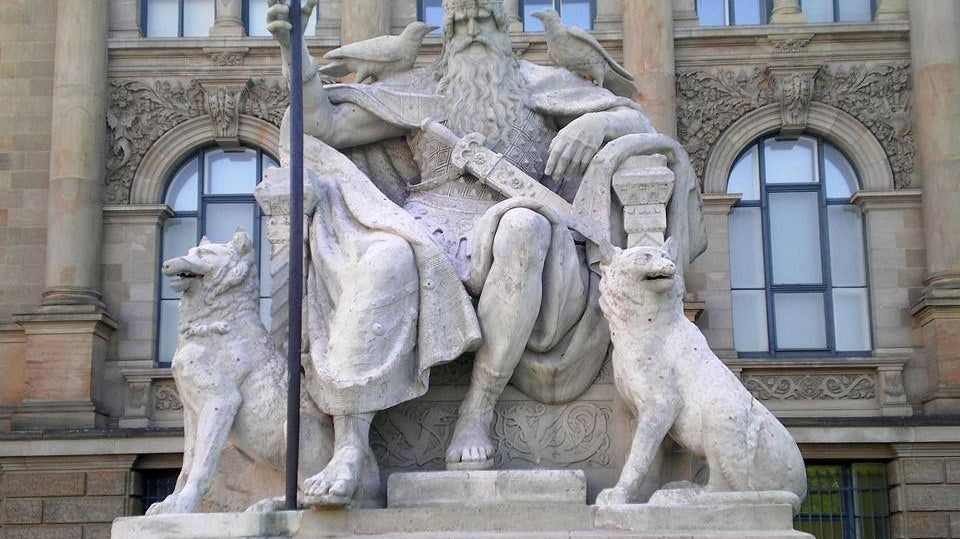
In the Viking Age, the closest parallel to Mabon would be haustblót, the autumn blót. This was a sacrificial feast to honour the gods, ancestors, and landvættir (spirits of the land) as the harvest came in. It was the season when herds were thinned, grain laid up for the cold months, and ale set to ferment for the coming feast. Freyr, lord of fertility and the harvest, stood at the centre of these rites, though Freyja and other gods of plenty and endurance were also honoured.
LIGHT AND DARK IN NORSE MYTH
While the Norse did not explicitly mark the equinox as a day of balance, their mythology reflects the cyclical struggle of light and dark:
-
Baldr, the shining god, slain and sent to Hel — a myth resonant with the waning of light.
-
Sunna (the Sun goddess) and Máni (the Moon god), eternally chased across the sky, maintaining cosmic balance.
- The idea that Fimbulwinter (the great winter before Ragnarök) loomed as the ultimate darkness.
So, while “Mabon” was not a Viking word, the seasonal awareness of harvest and the looming dark were central to Norse life.
A SPECULATIVE NOTE
Some Heathens today observe the equinox as a time to honour the Vanir gods (Freyr, Freyja, Njörðr) and the ancestors, drawing from historical haustblót practice. Though speculative, it is a meaningful bridge between ancient seasonal rites and modern Pagan Sabbats.
RUNES AND THE HARVEST CYCLE
The rune Jera (ᛃ), meaning “year” or “harvest,” captures the spirit of the season. It is the rune of cycles fulfilled — the reward of labour, the closing of one cycle and the promise of another. Jera reflects the same truth the equinox embodies: light gives way to dark, seed to fruit, and effort to outcome. For Heathens today, drawing or meditating on Jera at the equinox can be a way of honouring this eternal rhythm.
The harvest rune Jera reminds us that every ending carries the seed of a beginning.
BE WARM AND WISE THIS WINTER WITH OUR RAVEN BEANIE
[product-handle]f-ck-off-beanie[/product-handle]
THE BALANCE OF LIGHT AND DARK ACROSS TRADITIONS
Mabon may be a modern word, but the Autumn Equinox has always carried weight. Across the world, stories and festivals mark this brief balance between day and night, each culture finding its own way to speak of plenty giving way to decline.
-
In Greek myth, Persephone’s descent to the Underworld signalled the dark half of the year.
-
Among many Native American peoples, autumn ceremonies bound together hunting, gathering, and preparation for the cold months. Some groups, like the Zuni and Hopi, watched the sun’s movements and held rituals close to the equinox; others focused more broadly on the season’s turning.
- In Egypt, Osiris embodied the cycle of death and rebirth at the heart of agriculture, a theme that ran through the late-autumn festivals in his honour.
The details shift, but the thread is the same: gratitude for abundance, tempered by the knowledge that winter waits.
MABON IN WICCAN AND MODERN PAGAN TRADITIONS

The word Mabon entered Pagan vocabulary in the 20th century, largely through the work of Aidan Kelly in the 1970s, who named the equinox after the Welsh mythic figure. Gerald Gardner and early Wiccans had already established the Wheel of the Year, combining Celtic fire festivals with solstices and equinoxes into an eightfold cycle.
In modern Wicca and Paganism, Mabon is often seen as the “Witches’ Thanksgiving”:
RITUAL PRACTICES
Common Mabon rituals include:
-
Altars decorated with apples, pumpkins, grapes, pinecones, acorns, and autumn leaves.
-
Meditation on balance, using the equal day/night as a metaphor for inner equilibrium.
-
Offerings of bread, cider, wine, or fruit to the gods or spirits.
-
Feasting and storytelling around bonfires.
- Crafting charms of corn husks, herbs, or nuts.
Mabon is about gratitude for the harvest and recognising duality and transition — life and death, summer and winter, light and shadow.
CELEBRATE THE HARVEST BY PICKING OUR MUSHROOM T-SHIRT
[product-handle]shroom-tree-god-unisex-t-shirt-black[/product-handle]
RITUALS AND PRACTICES OF MABON TODAY
For those who celebrate today, Mabon can be a communal festival and a personal reflection.
WAYS TO HONOUR MABON
-
Build a harvest altar: Use apples, wheat sheaves, gourds, autumn leaves, and candles in gold and deep red.
-
Host a harvest feast: Share food and drink with friends, family, or community, echoing the blóts of old.
-
Offer thanks: Give a portion of your meal or a symbolic gift back to nature.
-
Balance rituals: Light two candles — one for light, one for dark — and meditate on harmony in your life.
-
Crafting and creativity: Make herbal sachets, corn dollies, or rune charms for protection through winter.
- Storytelling: Share myths and legends of gods tied to harvest, death, and rebirth.
PERSONAL REFLECTION
Mabon is also an invitation to ask:
-
Where is balance lacking in my life?
-
What must I harvest, and what must I release?
- How do I prepare myself for the darker months?
STEP-BY-STEP: YOUR AUTUMN EQUINOX RITUAL

The purpose of the rite is simple: to stand at the balance of light and dark, give thanks for the harvest gathered in, let go of what no longer has use, and set a clear intention to carry into the dark half of the year.
Timing: at sunset on the Autumn Equinox (or the nearest convenient evening).
Duration: ~30–45 minutes.
Setting: indoors or outdoors.
WHAT YOU’LL NEED
-
Altar basics: cloth in autumn tones; two candles (one light/white, one dark/black or deep red); matches/LED candles.
-
Purification: bowl of clean water + pinch of salt (or incense/herb smoke; or simply breath and intention).
-
Seasonal tokens: apples, grain/wheat sheaf, nuts, pinecones, leaves, and a small bowl for offerings.
-
Offerings/feast: a little bread or fruit and a sip of cider/mead/juice for libation; more for after-ritual sharing.
-
Optional tools: bell/drum; paper + pen; a fireproof dish (or shredder/water bowl) for the release rite; tarot/oracle/runes.
- Heathen variant (optional): horn/cup for toasts; simple “hallowing” in place of a Wiccan circle.
Safety: If using flame or smoke, keep water or sand nearby, follow local rules, and never leave anything burning unattended. Indoors, use LED candles and skip smoke.
1. PREPARE THE SPACE
Tidy up. Silence phones. If you like, wash your hands/face as a reset. Place the altar where it feels steady and quiet.
Set the altar: Place the light candle to the west and the dark candle to the east, or simply side-by-side. Arrange seasonal items. Put the offering bowl front-centre.
2. GROUND AND CENTRE
Stand or sit tall. Breathe in for 4, hold 4, out for 6. Feel your weight settle. Briefly name your purpose: “I mark the balance of light and dark, give thanks, and set a wise intention for winter.”
3. PURIFY
Choose one:
-
Water + salt: touch to brow and hands: “By clean water and salt, let this space be clear.”
-
Smoke/herb: waft over altar and self: “What is heavy leaves with the smoke.”
- Breath only: three long exhales while sweeping hands outward.
4. MARK THE RITUAL BOUNDARY
Pick the style that fits your path:
A) Simple declaration (universal):
Walk the perimeter (or trace a circle with your hand):
“This space is set apart for the Autumn Equinox. May only peace and purpose be here.”
B) Wiccan-inspired (quarters optional):
Point or turn to each direction:
-
East (air): clarity in thought.
-
South (fire): courage and warmth.
-
West (water): gratitude and grace.
-
North (earth): harvest and strength.
Then: “The circle is cast; between light and dark I stand.”
C) Heathen/Heathen-friendly (no “Mabon” claims):
Hallow the space with a hammer sign or raised hand:
“Let this vé be hallowed. Landwights, honoured. Ancestors, remembered. Gods and good powers, be welcome.”
5. LIGHT THE TWO CANDLES
Light the light and dark candles. Say:
“On this equal night and day, I witness balance. What has grown is gathered; what has served may rest. I stand at the turning.”
(LED candles: switch on with the same words.)
6. GRATITUDE FOR THE HARVEST
Name three things you’re thankful for from the light half of the year — achievements, lessons, people, health, even hard-won insights. As you speak each one, place a token (apple slice, leaf, grain) in the offering bowl.
“For ______, I give thanks.”
If you’re in a group, go round once, keep it brief but sincere.
7. THE BALANCE WORKING: KEEP AND RELEASE
On two slips of paper, write:
-
KEEP: one strength or practice to carry through winter.
- RELEASE: one habit/weight you are ready to let go of.
Hold both slips of paper in your hands — one in each. Weigh them like scales.
Say:
“Light and dark stand equal; I choose my balance.”
-
Place KEEP under the light candle.
-
For RELEASE:
-
Fireproof dish: burn carefully, watching the smoke rise.
-
No flame: tear into small pieces and drop into water, or shred.
- Outdoors: bury under fallen leaves.
-
Fireproof dish: burn carefully, watching the smoke rise.
As you release, say:
“What is finished returns to earth.”
8. LIBATION & OFFERING
Pour a little drink and crumble a bit of bread or fruit into the offering bowl or onto the ground (outdoors).
“A share for the land, a share for the unseen, a share for those who came before.”
(Indoors: later, take offerings outside or compost respectfully.)
9. ONE INTENTION FOR THE DARK HALF
Write one practical vow for the coming months — specific and achievable (e.g., “complete the manuscript by Yule,” “weekly woodland walk,” “save £X by midwinter,” “call my elders every Sunday”).
Hold the vow to your chest:
“As the nights grow long, I will tend this flame.”
Place the paper beneath the dark candle to “root” it.
10. DIVINATION FOR GUIDANCE
Draw one tarot card, rune, or ogham stave for a guiding theme. Note it in a journal. If Heathen-leaning, a single Jera (harvest), Gebo (gift), or Eihwaz (endurance) draw fits the season — interpret in your own words.
11. ANCESTORS & COMMUNITY TOASTS (HEATHEN-STYLE SUMBEL, OPTIONAL)
Three brief rounds with a shared cup (or individual cups):
- To the gods/good powers of harvest and home.
- To the ancestors and beloved dead.
- To the living — this house/kin/community — and to the vow you’ve set.
Keep it simple and sincere — no need to be theatrical.
12. CLOSING
Thank any powers you named. Extinguish or switch off the candles:
“Balance has been witnessed. This rite is ended; its work continues.”
If you cast a circle or hallowed space, open it:
-
Wiccan: “The circle opens yet remains; go in balance.”
- Heathen: “Let the vé be unhallowed. Peace to the house.”
13. FEAST AND SHARE
Eat seasonal food, pass around the cider/tea, and tell a story. Leave a portion of the feast outdoors later, with respect.
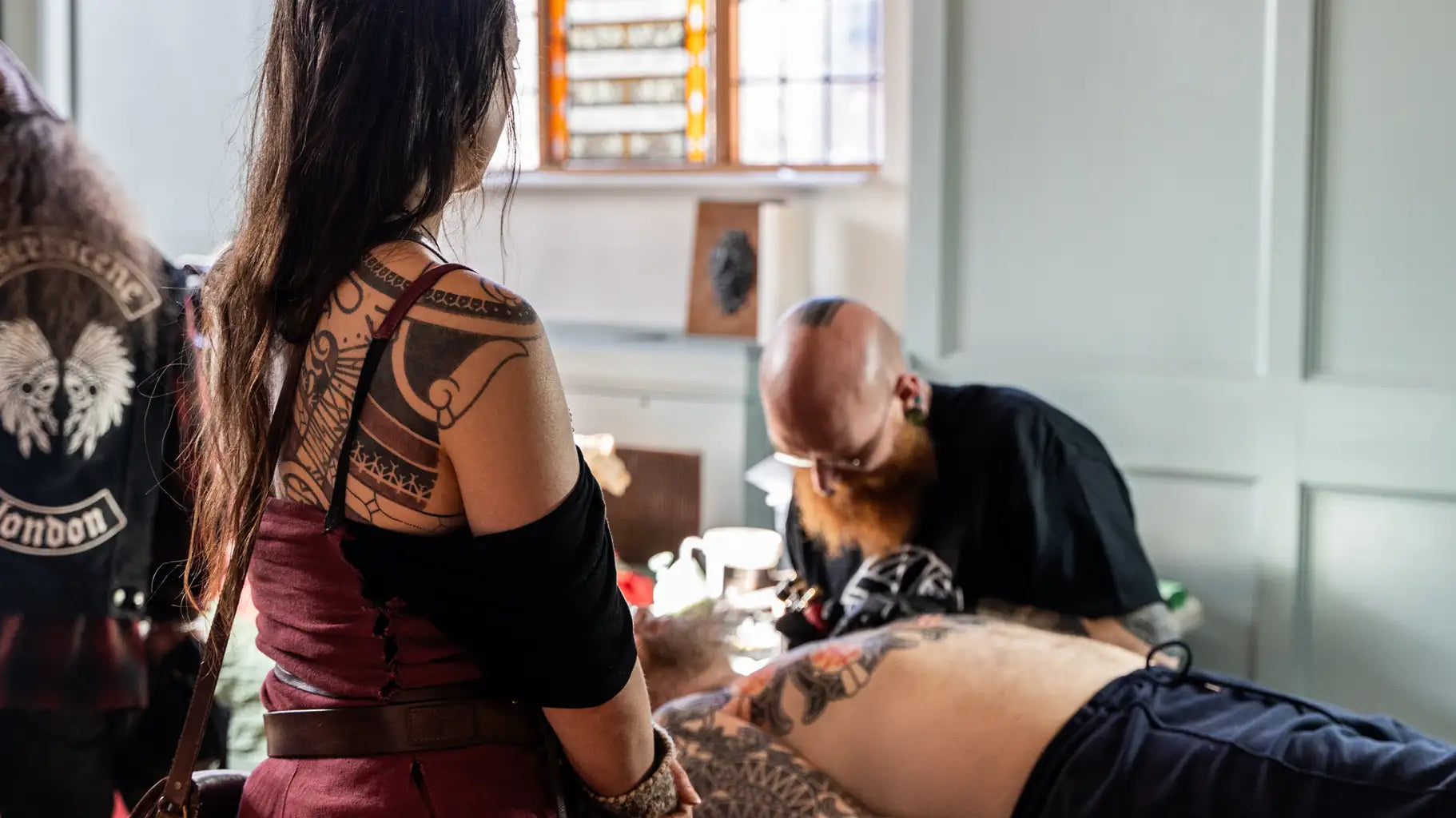
MABON AND TATTOO SYMBOLISM

As with many points on the Wheel of the Year, Mabon lends itself to imagery that carries well into body art. Tattoos are, after all, a way of marking the skin as the land is marked by the seasons.
-
Balance motifs: paired designs (sun and moon, day and night, scales, twin stags, or mirrored knots) echo the equinox itself — light and dark in equal measure.
-
Harvest symbols: apples, acorns, wheat sheaves, grapes, or cornucopia forms have long been tied to equinox rites.
-
Celtic and Norse knots: interlace patterns that twist into symmetry embody the theme of cycles and balance.
-
Animal forms: ravens, stags, wolves, or serpents — creatures associated with both life and death, threshold states, or the approach of winter — make powerful seasonal marks.
- Runes and ogham: symbols such as Jera (harvest, year’s turning) or ogham staves for apple (quert) and oak (duir) can quietly hold equinox meaning.
For those who walk a Heathen or Celtic path, a Mabon-inspired tattoo need not be explicit. It may simply weave the season’s imagery — the gathering-in, the balance, the descent into shadow — into a design that carries personal weight. Tattoos, like festivals, are reminders that what is written on the skin is also written in the cycles of the earth.
FOR MORE TATTOO INSPIRATION, CHECK OUT THE NORDIC TATTOO TRIO BUNDLE
[product-handle]bundle-the-nordic-tattoo-trio[/product-handle]
MABON AS A TIME OF BALANCE
Mabon is not simply a date on the wheel of the year. It is a reminder of the rhythm all life shares: light fading, darkness rising, the harvest gathered, the cold drawing near. It is an invitation to stop, to give thanks, and to recognise that balance, while fleeting, is sacred.
For Pagans, Heathens, Wiccans, and all who keep the turning of the seasons, Mabon is a threshold. It is the last feast of warmth before winter’s silence, a moment when the scales hang even between sun and shadow. Some mark it with a haustblót, some with modern ritual, others by nothing more elaborate than breaking bread and sharing apples by firelight.
However it is kept, Mabon asks us to honour both the gifts and the limits of the year. As the nights lengthen, may we carry gratitude and balance with us into the dark, remembering that the dance of shadow and light is eternal.
MARK THE AUTUMN EQUINOX WITH TOOLS THAT HONOUR THE OLD WAYS — EXPLORE OUR RUNES, BOOKS, AND HOMEWARE.